As part of the National Acceleration Strategy for Digital Health, funded by France 2030, the Digital Health program is pleased to announce the 16 projects selected under its call for proposals, operated by the French National Research Agency (ANR).
With a total budget of €24.5 million, this call supports 16 research projects, each with a duration of four years, dedicated to the development of multi-scale digital twins applied to health. These projects rely on innovative approaches combining data, modelling, artificial intelligence and clinical expertise, with a shared ambition: to advance digital health research for the benefit of patients and healthcare systems.
16 projects advancing digital twins in health
The selected projects illustrate the diversity of digital twin applications in health, ranging from the study of complex diseases to the optimisation of care pathways, as well as the modelling of biological and physiological functions.
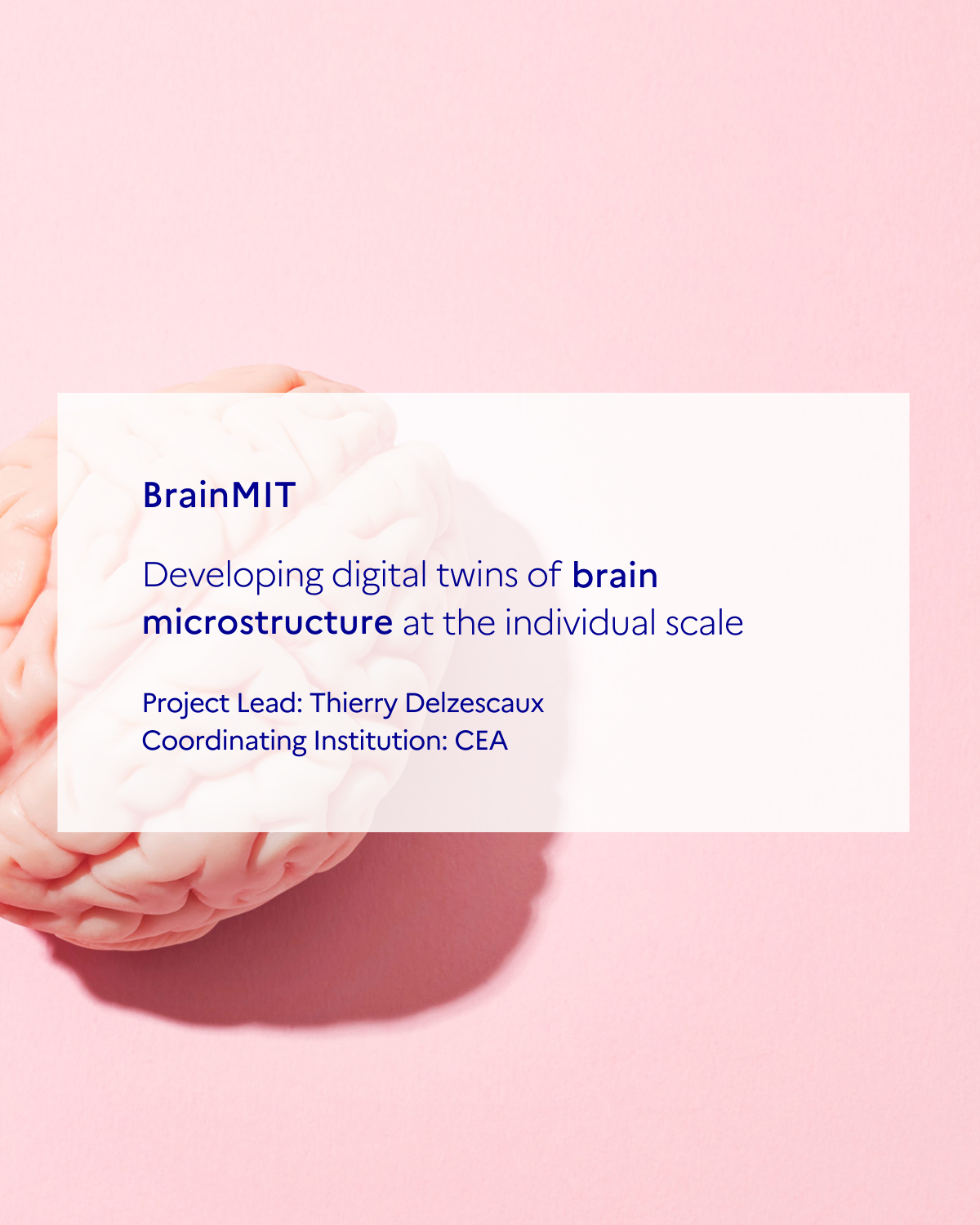
- BrainMIT – Developing digital twins of brain microstructure at the individual scale
Project Lead: Thierry Delzescaux
Coordinating Institution: CEA - BRAINTWIN – Simulating the progression of central nervous system diseases and their responses to treatment through AI-driven modelling combined with multimodal data fusion
Project Lead: Agustí Alentorn
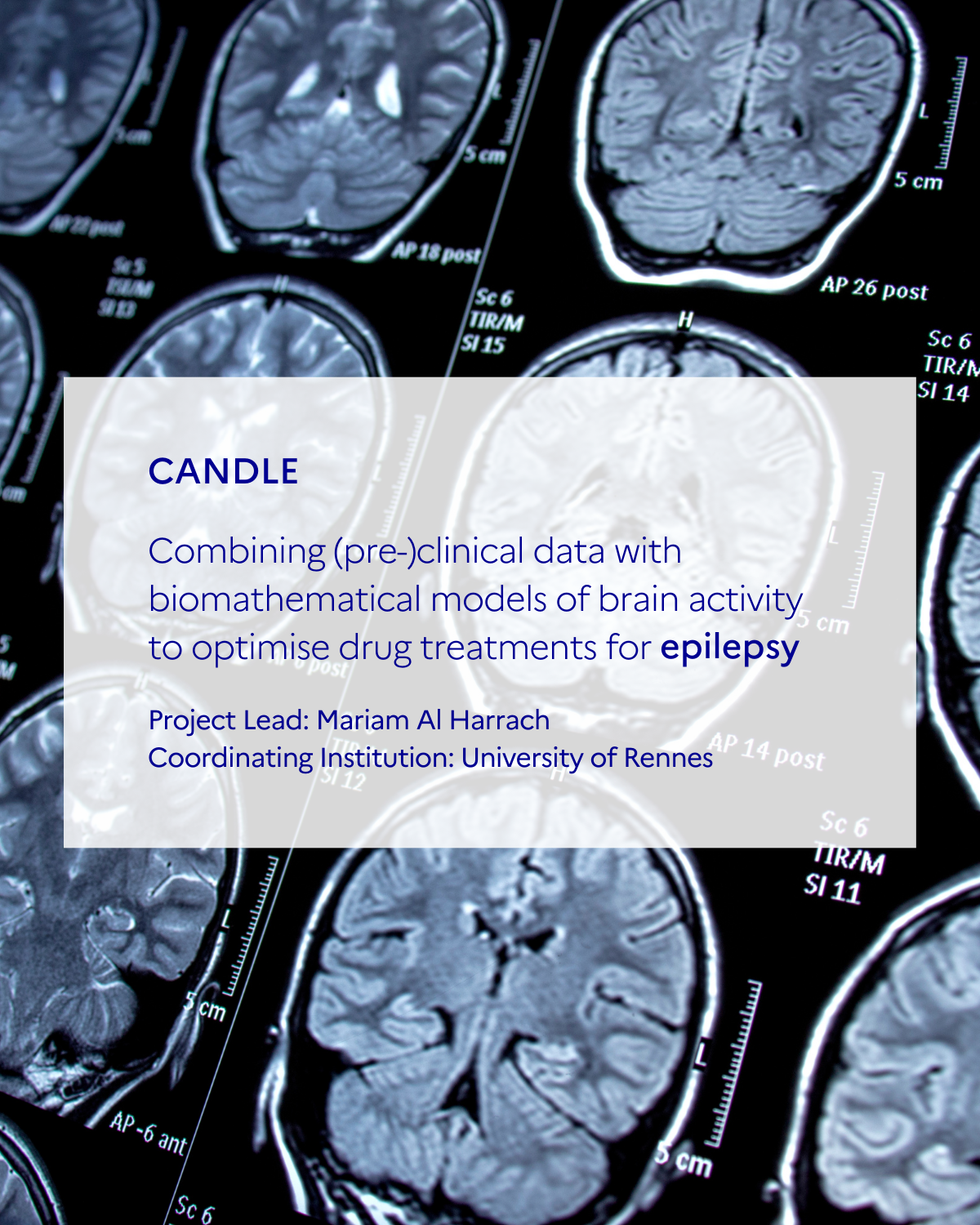
Coordinating Institution: Paris Brain Institute - CANDLE – Combining (pre-)clinical data with biomathematical models of brain activity to optimise drug treatments for epilepsy
Project Lead: Mariam Al Harrach
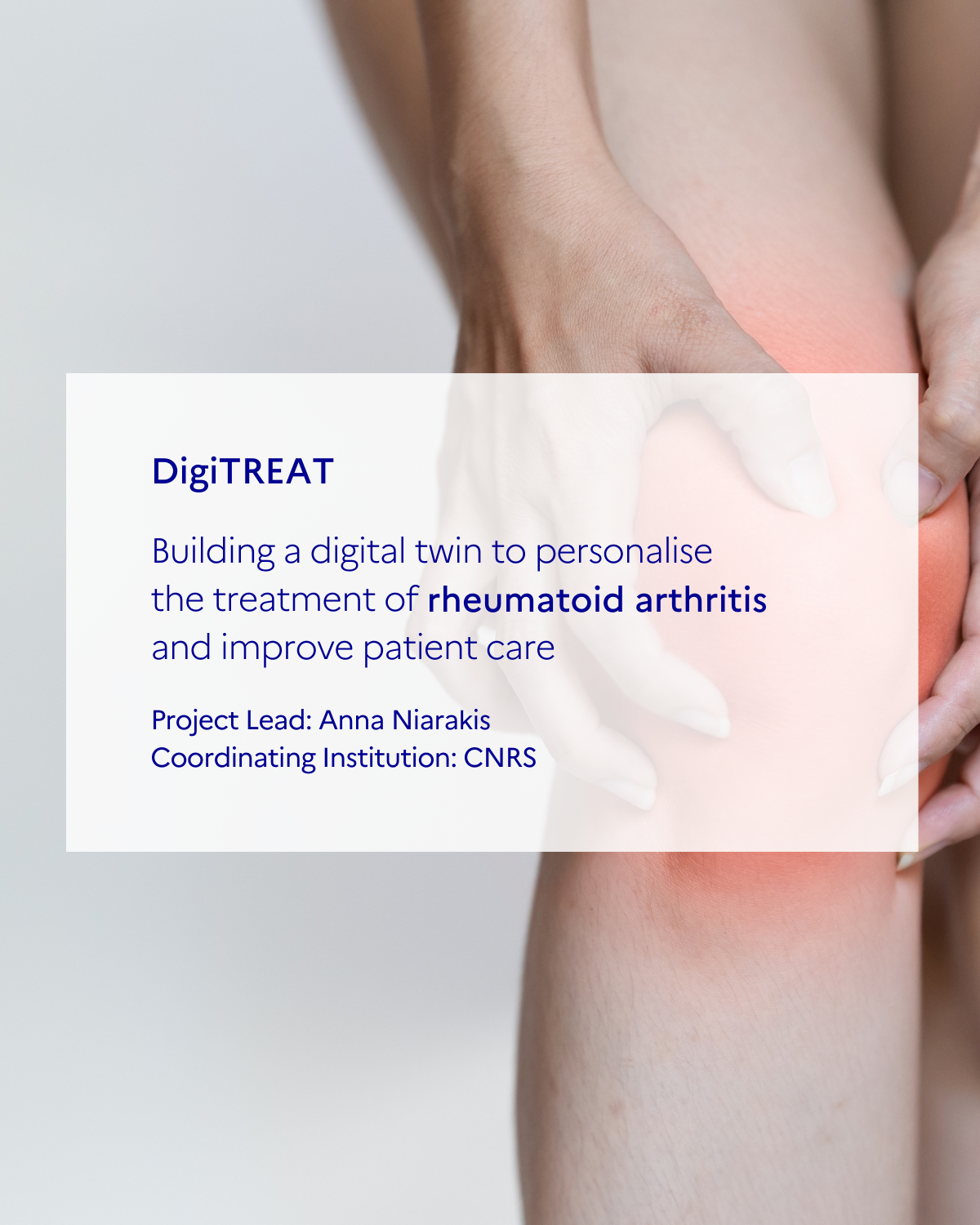
Coordinating Institution: University of Rennes - DigiTREAT – Building a digital twin to personalise the treatment of rheumatoid arthritis and improve patient care
Project Lead: Anna Niarakis
Coordinating Institution: CNRS - EvoluPark – Developing a multi-scale digital twin to improve diagnosis and personalised modelling of Parkinson’s disease progression
Project Lead: Gwenolé Quellec
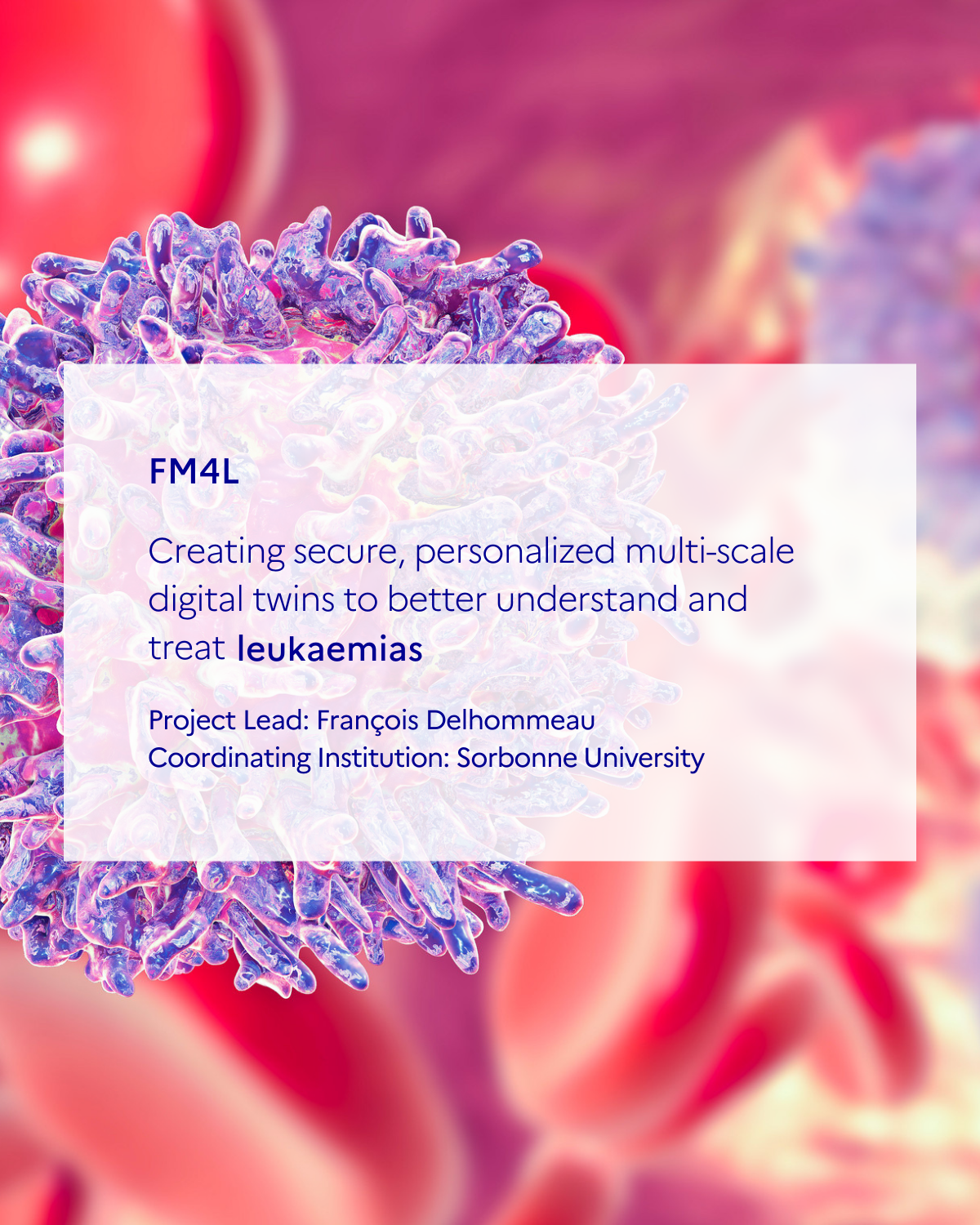
Coordinating Institution: University of Brest - FM4L – Creating secure, personalized multi-scale digital twins to better understand and treat leukaemias
Project Lead: François Delhommeau
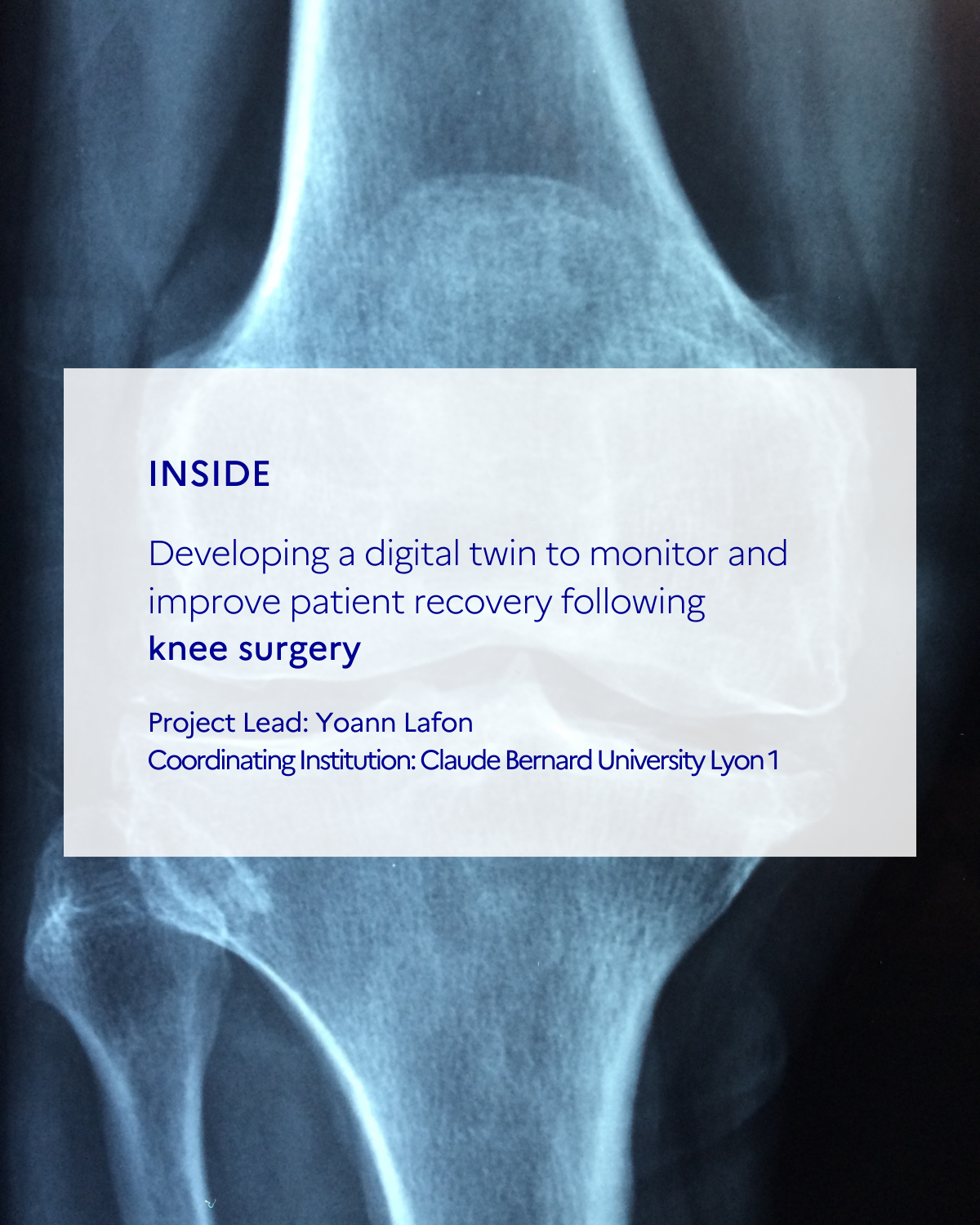
Coordinating Institution: Sorbonne University - INSIDE – Developing a digital twin to monitor and improve patient recovery following knee surgery
Project Lead: Yoann Lafon
Coordinating Institution: Claude Bernard University Lyon 1
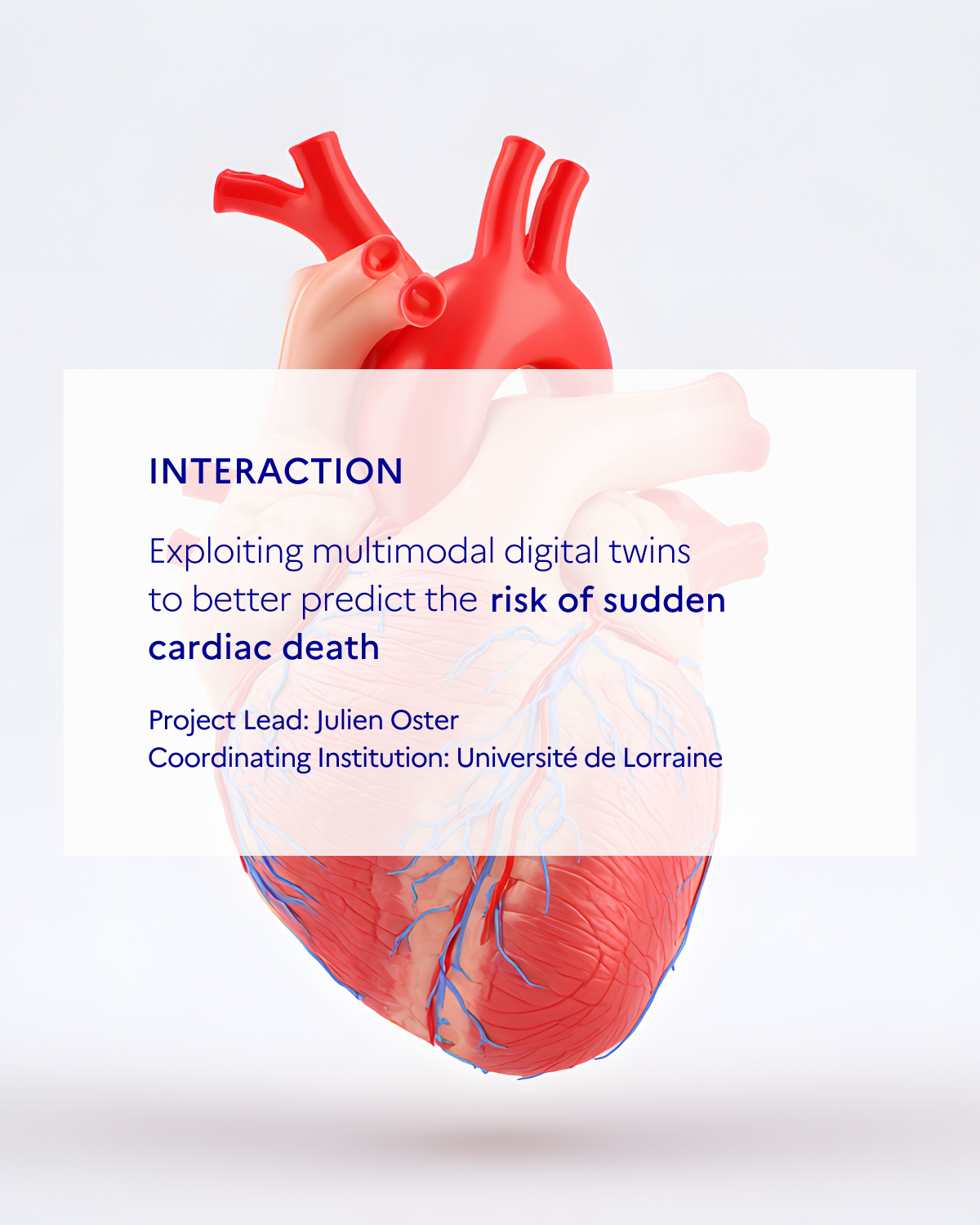
- INTERACTION – Exploiting multimodal digital twins to better predict the risk of sudden cardiac death
Project Lead: Julien Oster
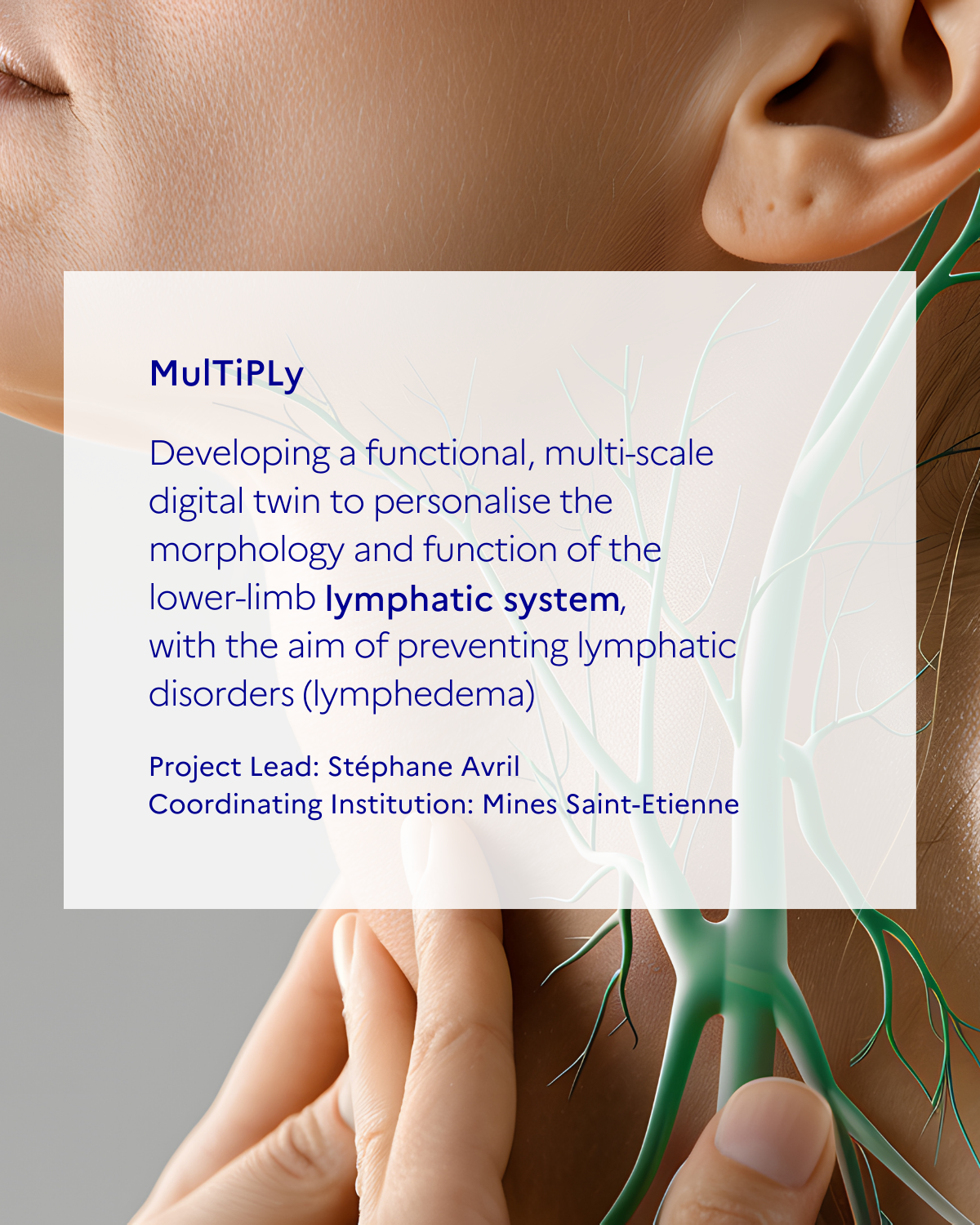
Coordinating Institution: University of Lorraine - MulTiPLy – Developing a functional, multi-scale digital twin to personalise the morphology and function of the lower-limb lymphatic system, with the aim of preventing lymphatic disorders (lymphedema)
Project Lead: Stéphane Avril
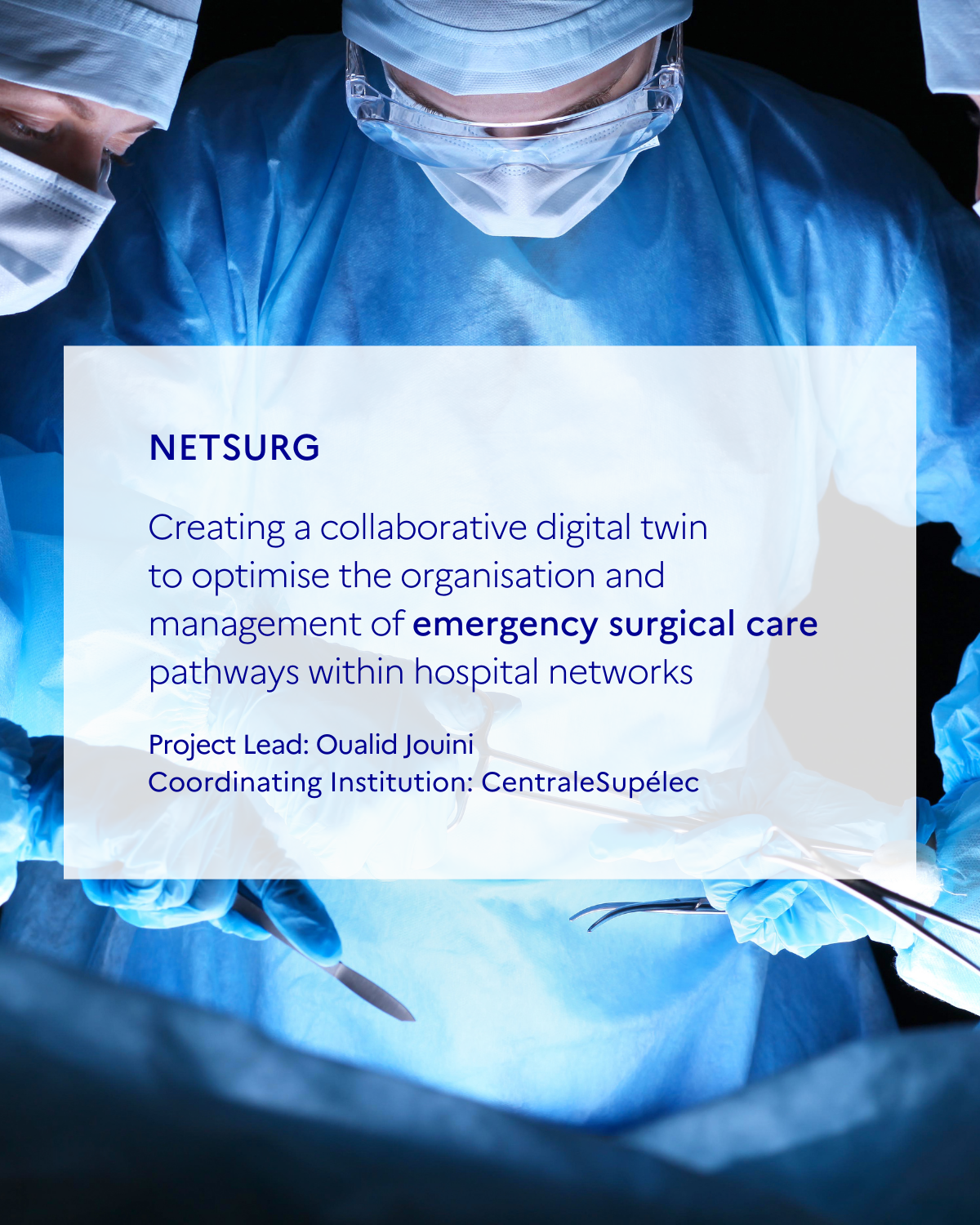
Coordinating Institution: Mines Saint-Etienne - NETSURG – Creating a collaborative digital twin to optimise the organisation and management of emergency surgical care pathways within hospital networks
Project Lead: Oualid Jouini
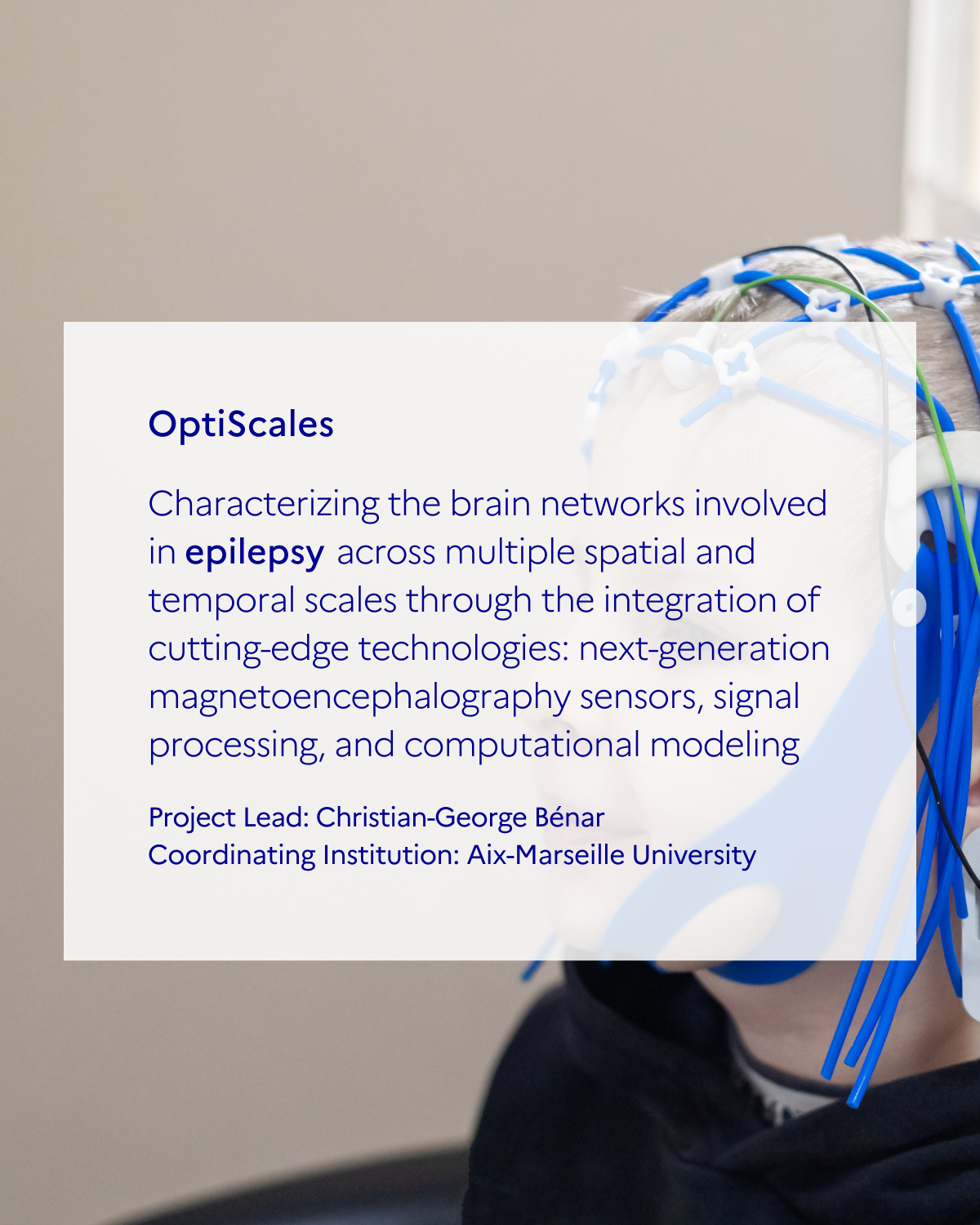
Coordinating Institution: CentraleSupélec - OptiScales – Characterizing the brain networks involved in epilepsy across multiple spatial and temporal scales through the integration of cutting-edge technologies: next-generation magnetoencephalography sensors, signal processing, and computational modeling
Project Lead: Christian-George Bénar
Coordinating Institution: Aix-Marseille University - PREDIT4FACE – Developing a digital twin to better understand, model and rehabilitate facial mimicry
Project Lead: Marie-Christine Ho Ba Tho
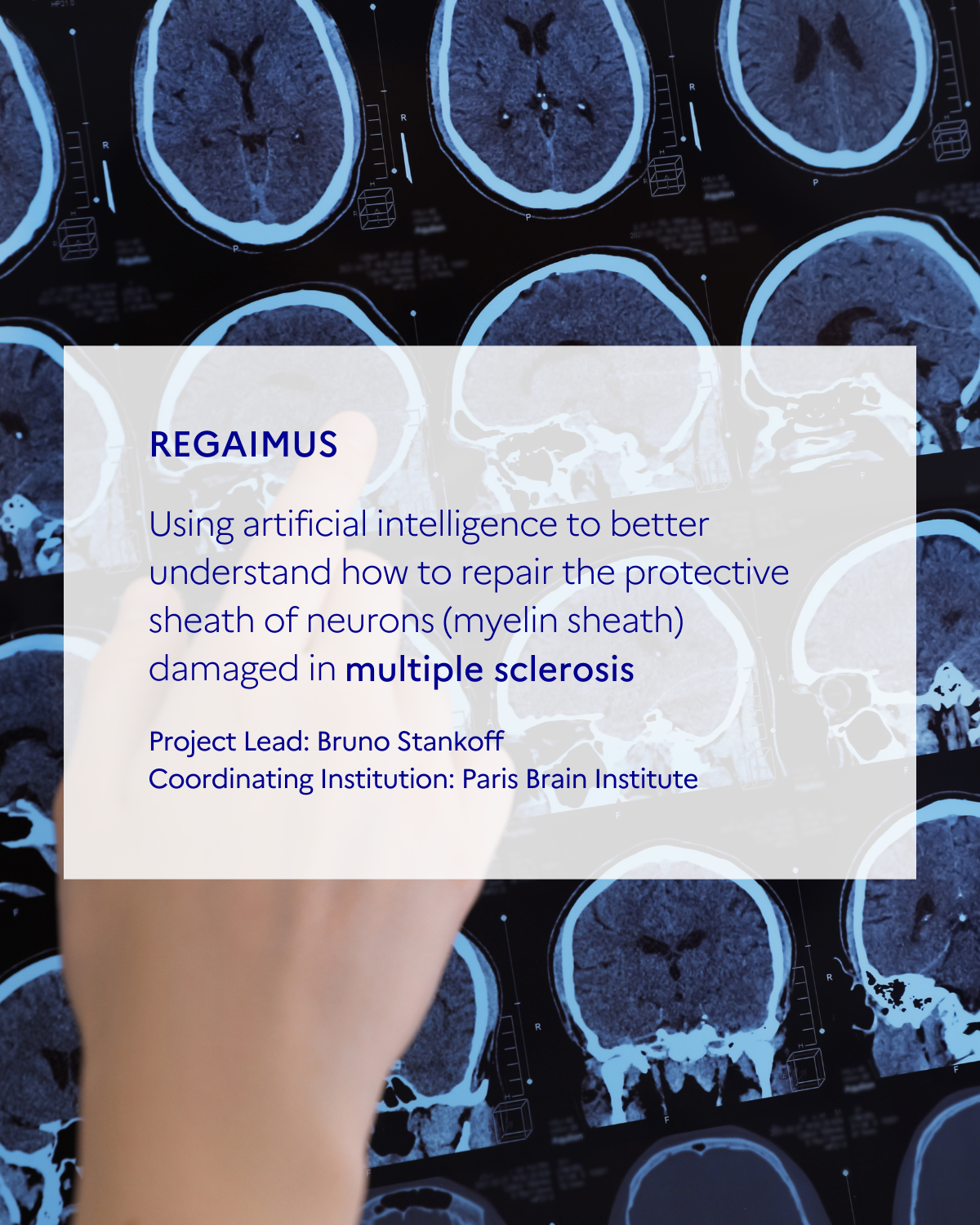
Coordinating Institution: CNRS - REGAIMUS – Using artificial intelligence to better understand how to repair the protective sheath of neurons (myelin sheath) damaged in multiple sclerosis
Project Lead: Bruno Stankoff
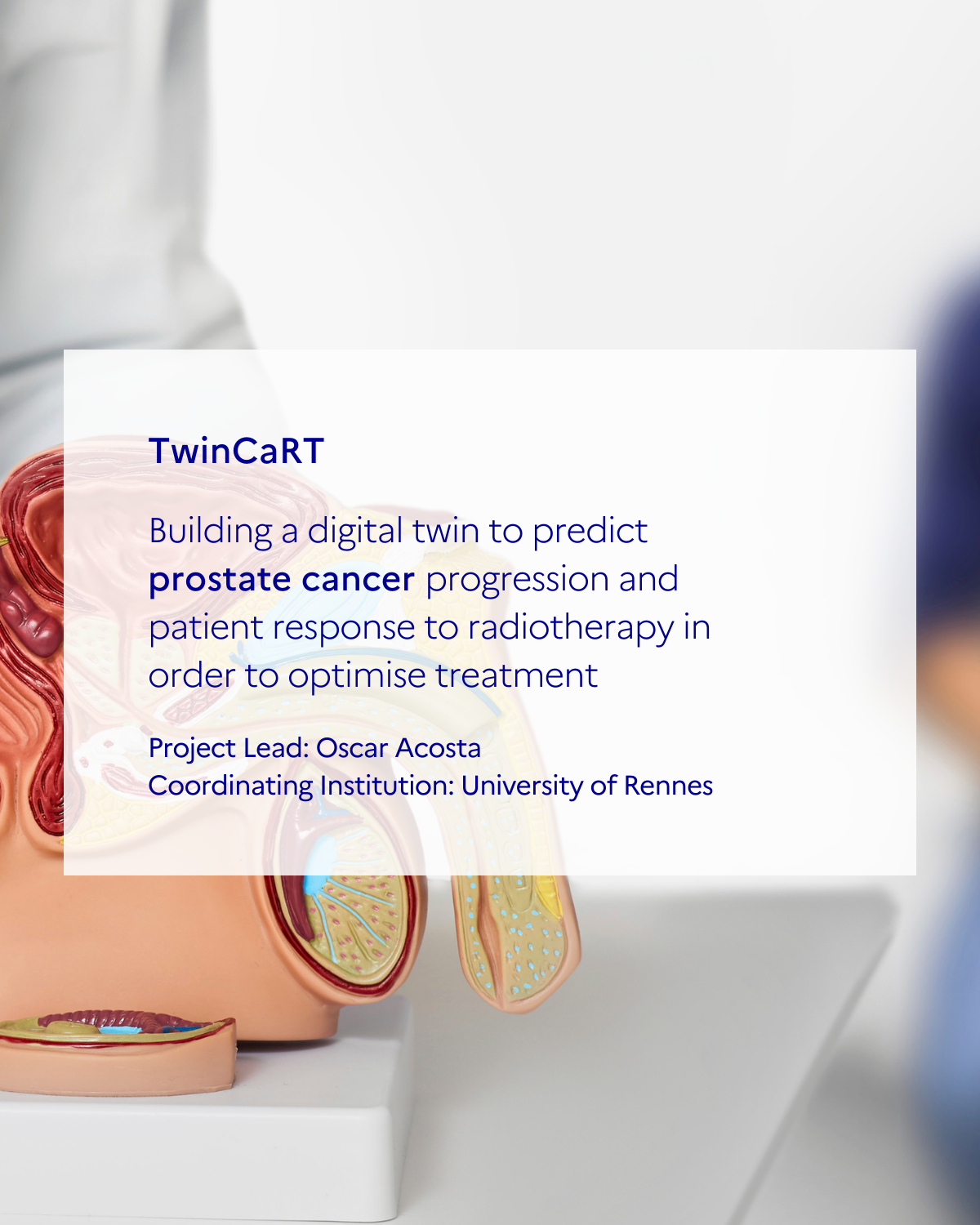
Coordinating Institution: Paris Brain Institute - TwinCaRT – Building a digital twin to predict prostate cancer progression and patient response to radiotherapy in order to optimise treatment
Project Lead: Oscar Acosta
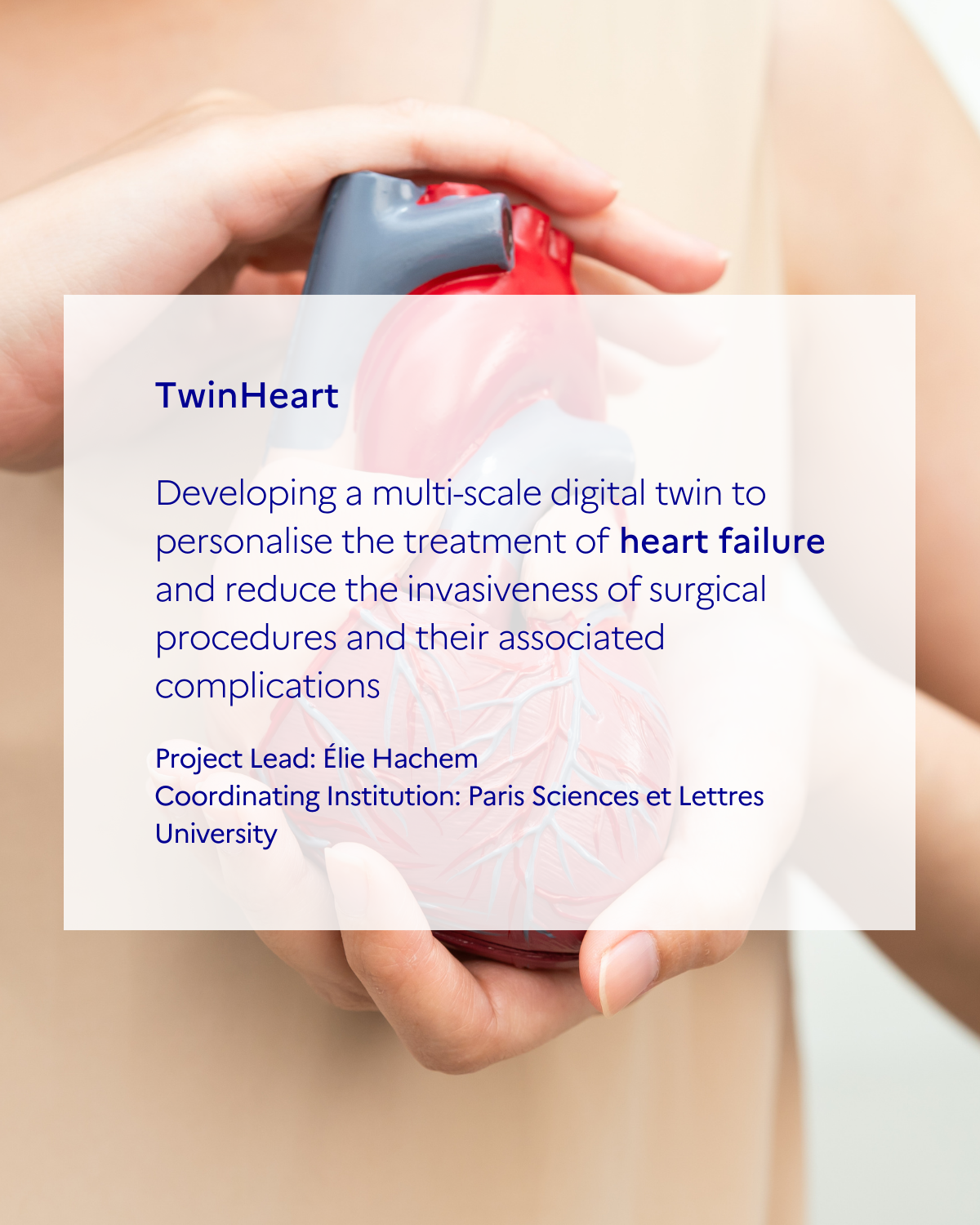
Coordinating Institution: University of Rennes - TwinHeart – Developing a multi-scale digital twin to personalise the treatment of heart failure and reduce the invasiveness of surgical procedures and their associated complications
Project Lead: Élie Hachem
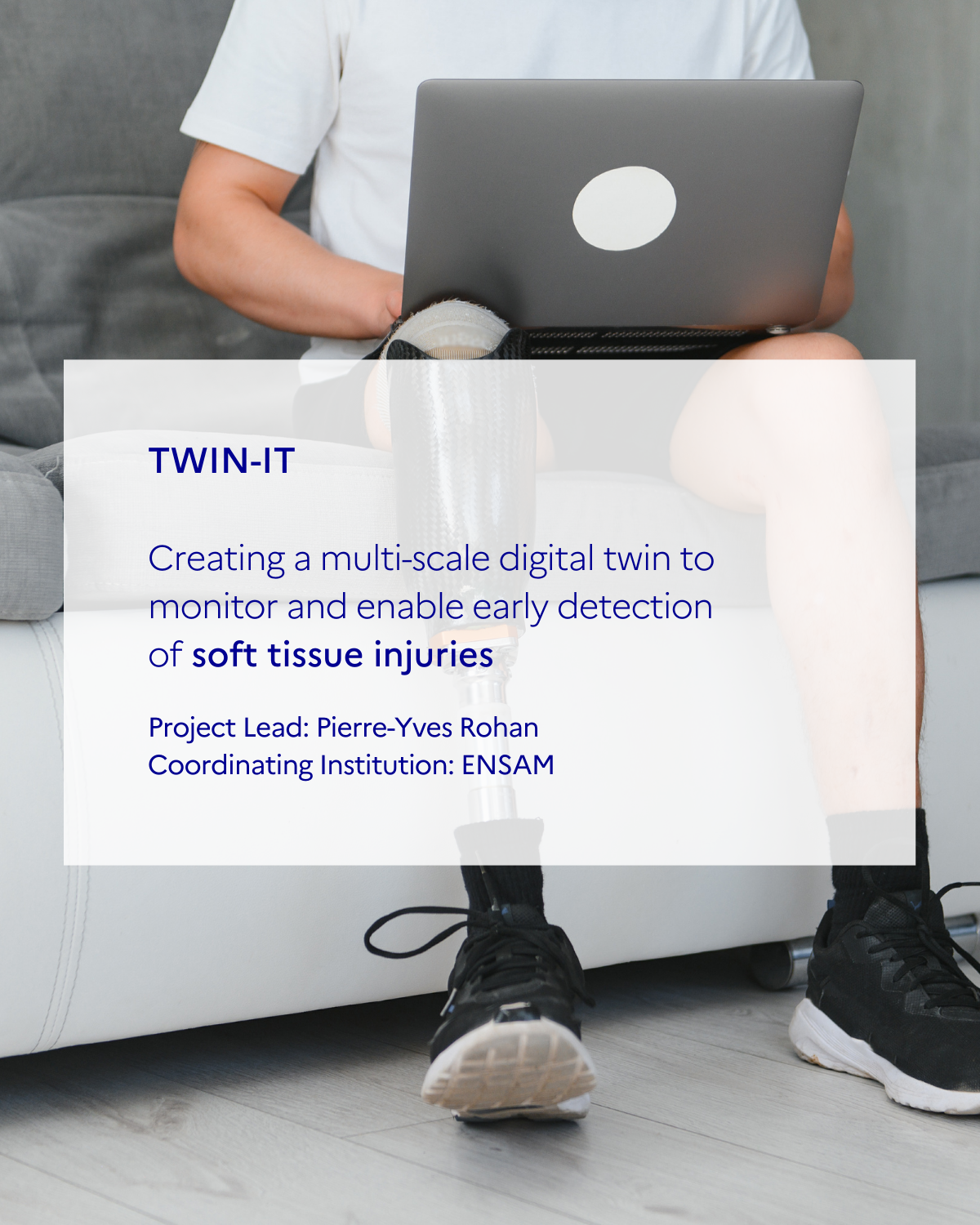
Coordinating Institution: Paris Sciences et Lettres University - TWIN-IT – Creating a multi-scale digital twin to monitor and enable early detection of soft tissue injuries
Project Lead: Pierre-Yves Rohan
Coordinating Institution: ENSAM

A structuring program for digital health research
These 16 newly selected projects complement the 17 ongoing flagship projects within the Digital Health program, expanding the range of research themes and clinical challenges addressed.
Through the diversity, complementarity and coherence of the supported scientific approaches, the Digital Health program contributes to the long-term structuring of an ecosystem of excellence, serving innovation, scientific sovereignty and the transformation of healthcare systems, within a strong collective dynamic.