A reminder of the key challenges and the origins of the Digital Health Research Program
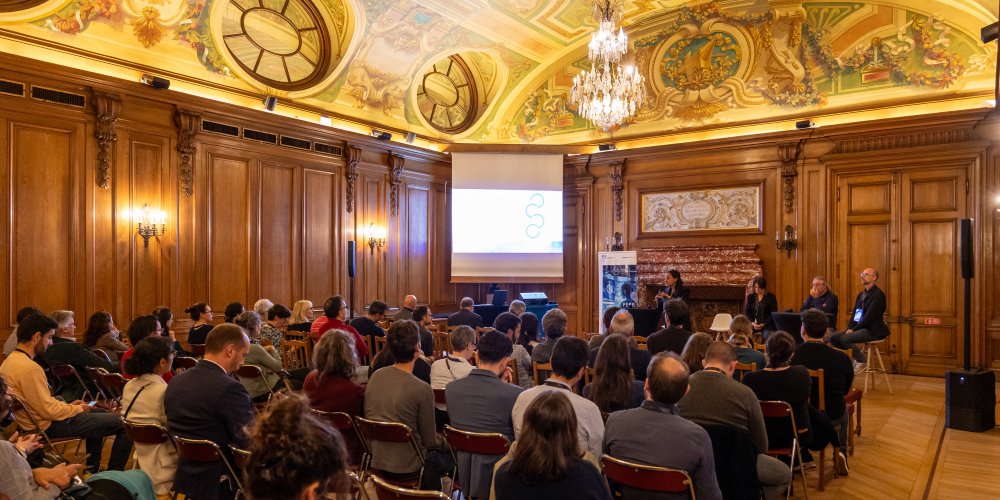
The scientific leads of the Digital Health Research Program, Philippe Gesnouin (Inria) and Lotfi Senhadji (Inserm), then retraced the origins of the program. They reviewed the major scientific and societal challenges it addresses, as well as its structuring objectives, notably emphasizing:
“the development of innovative models, tools, and methods to optimally produce, manage, and leverage the growing volumes of heterogeneous health data, as well as the development and use of the multi-scale digital twin concept for the patient.”
They also explained how the Digital Health Research Program was built, based on close co-design across 17 so-called ‘bilateral’ projects, organized around four major complementary research programs.

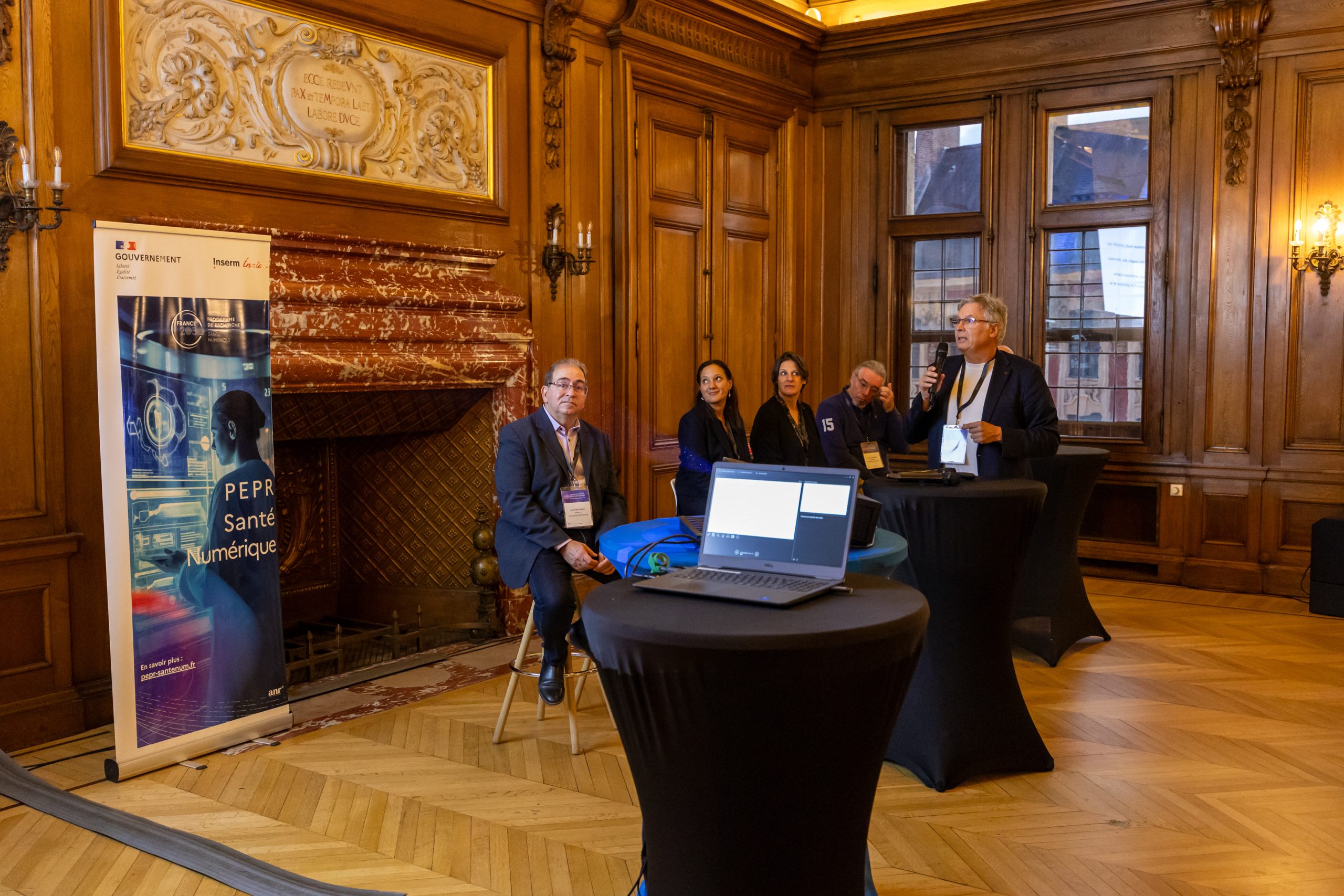
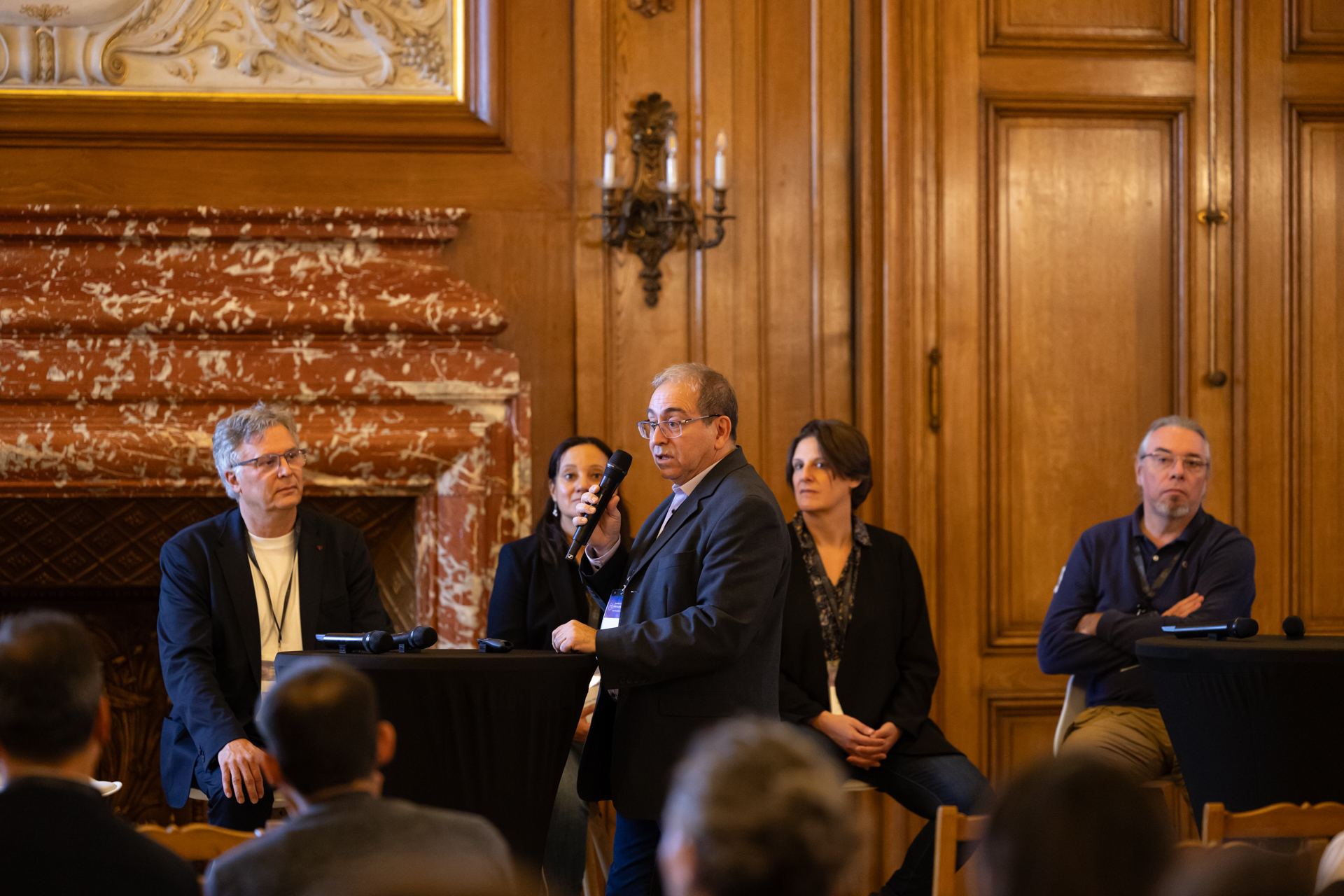
An overview of the program’s structuring projects
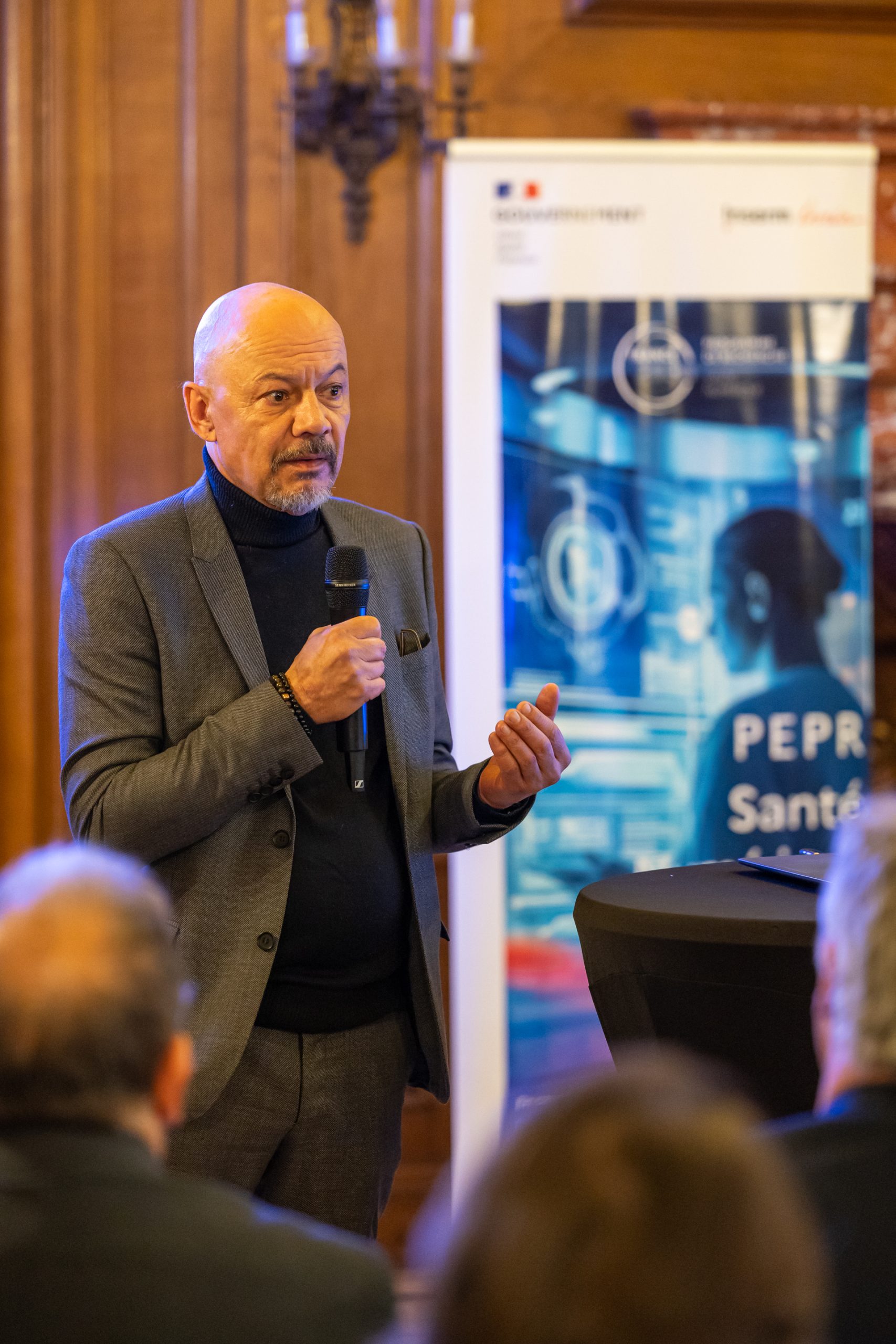
The session continued with presentations by four project leaders, each illustrating one of the research programs:
Carine Milcent, economist, CNRS Research Director and Associate Professor at the Paris School of Economics, presented the program “Overcoming the technical and sociodemographic challenges of personalized and multi-scale health data use” through the SAFEPAW project. This project focuses on the societal determinants of e-health in care pathways, analyzing them from the perspectives of all stakeholders involved (patients, healthcare professionals, regulators, etc.).
Richard Redon, Inserm Research Director and Head of the Institute of Thorax Laboratory, illustrated the program “Improving multi-scale observability and predicting cardiovascular diseases” with the NEUROVASC project, which aims to develop a 5P medicine approach to reduce the impact of intracranial aneurysm and stroke.
Spase Petkoski, Inserm Research Scientist (Institute of Systems Neuroscience, Aix-Marseille University), presented the BHT – Brain Health Trajectories project, representing the program “Designing innovative digital approaches for early detection and prediction of neurological diseases.” This project seeks to establish brain health trajectories based on structural and functional biomarkers grounded in computational models.
Finally, Anaïs Baudot, CNRS Research Director, revisited the program “Developing new digital methods for multi-scale analysis of health data” through the M4DI project. She emphasized the importance of theoretical and methodological advances in digital health, and the project’s key role in integrating multimodal and multi-scale data, notably through training early-career researchers with interdisciplinary profiles.
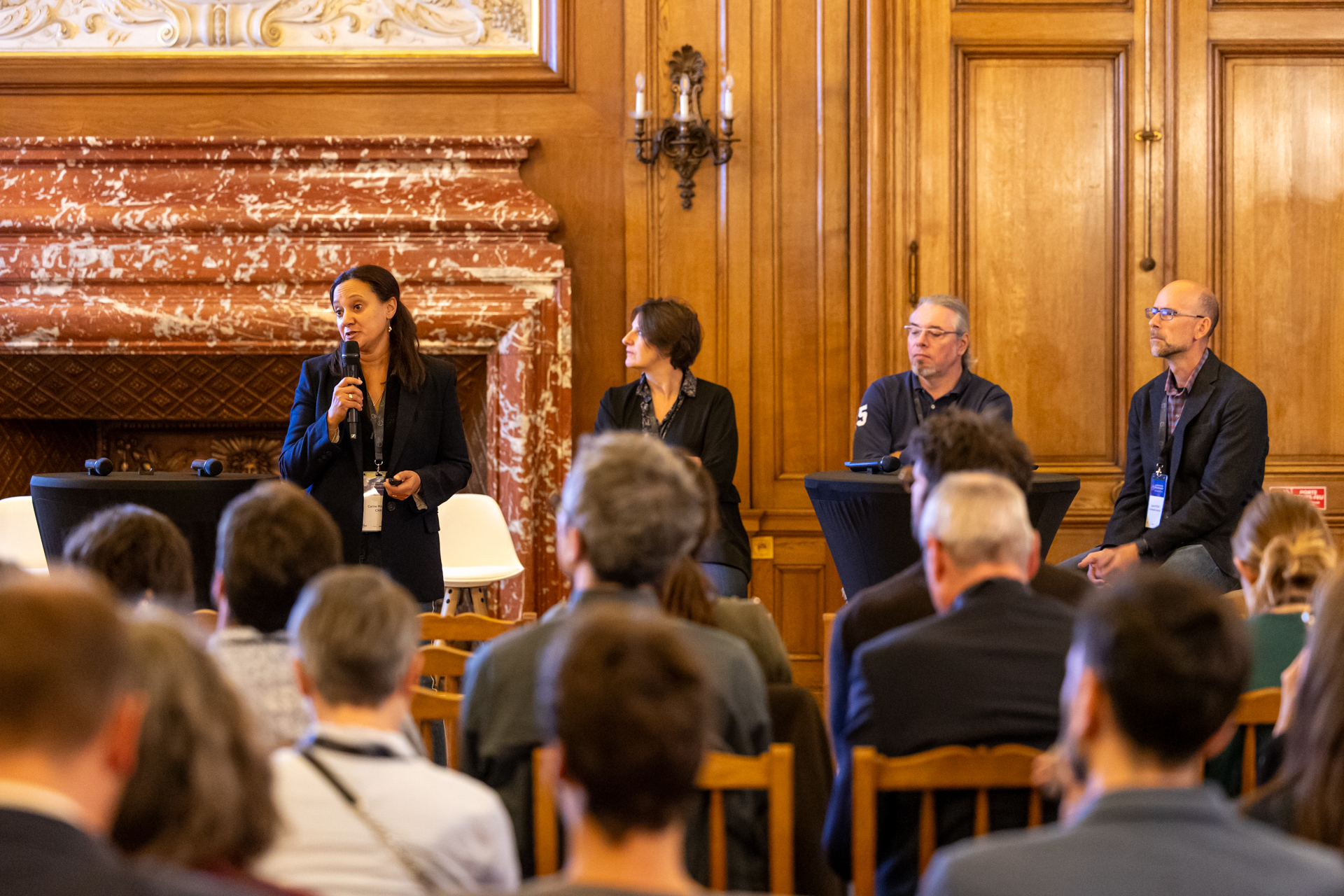
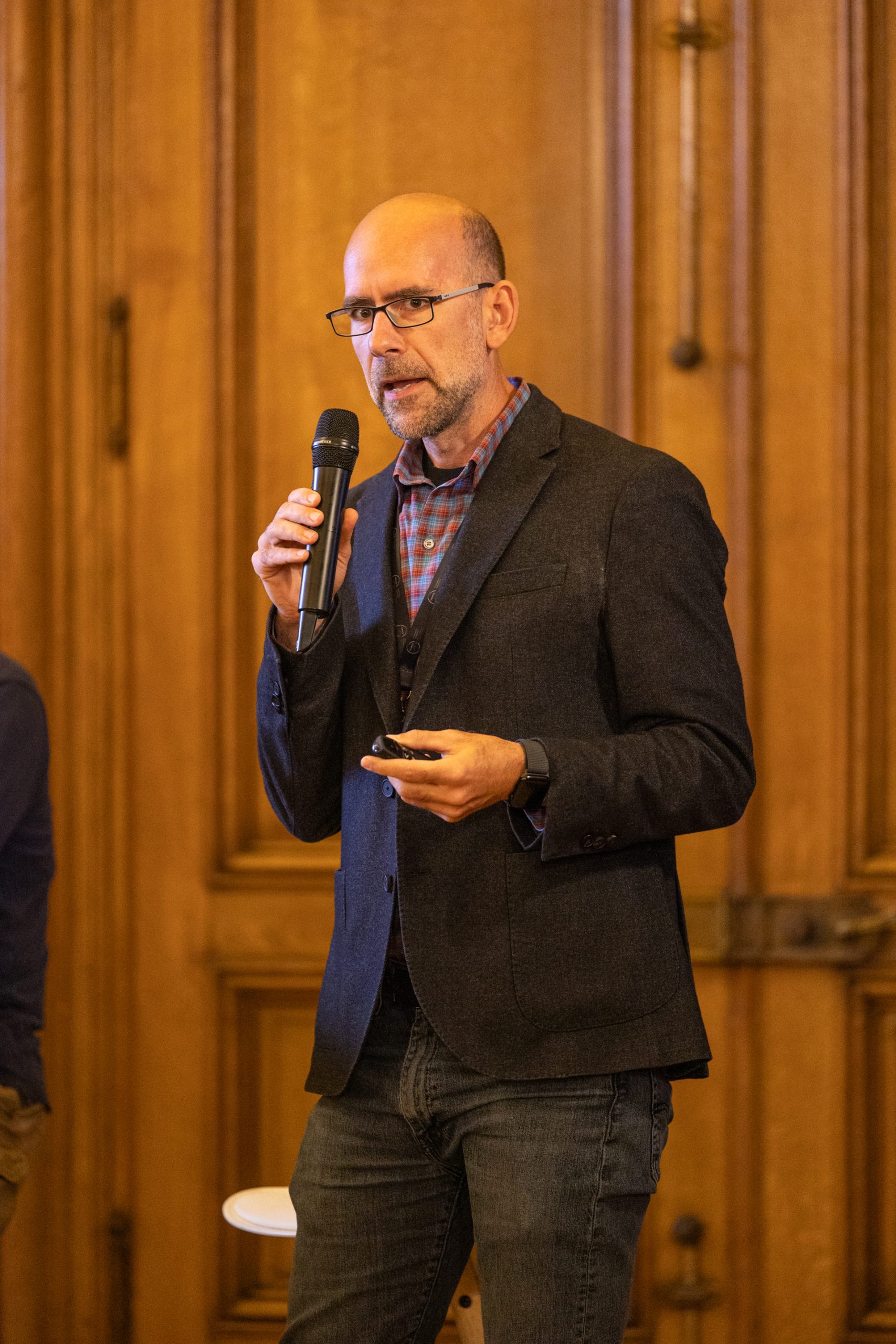
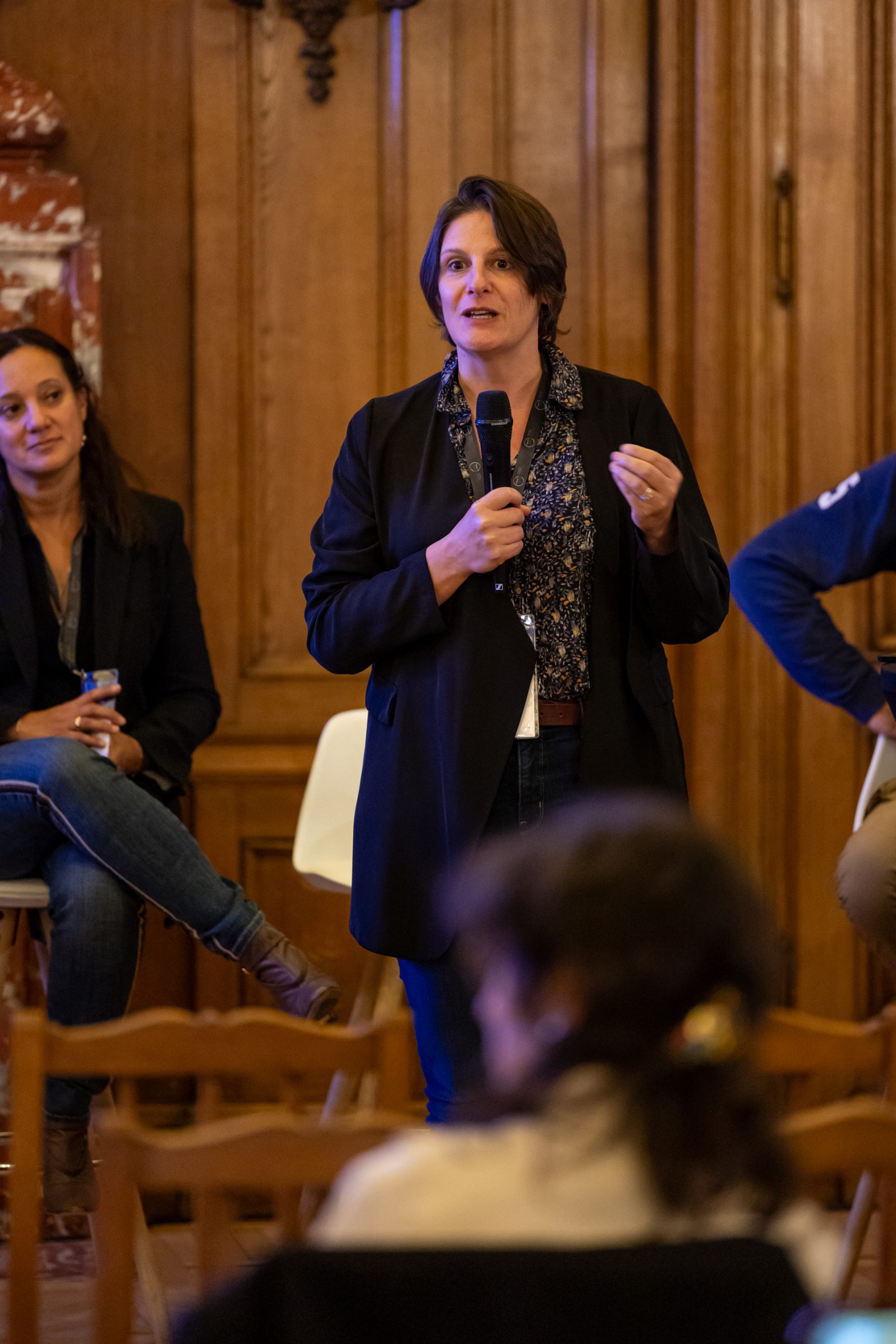
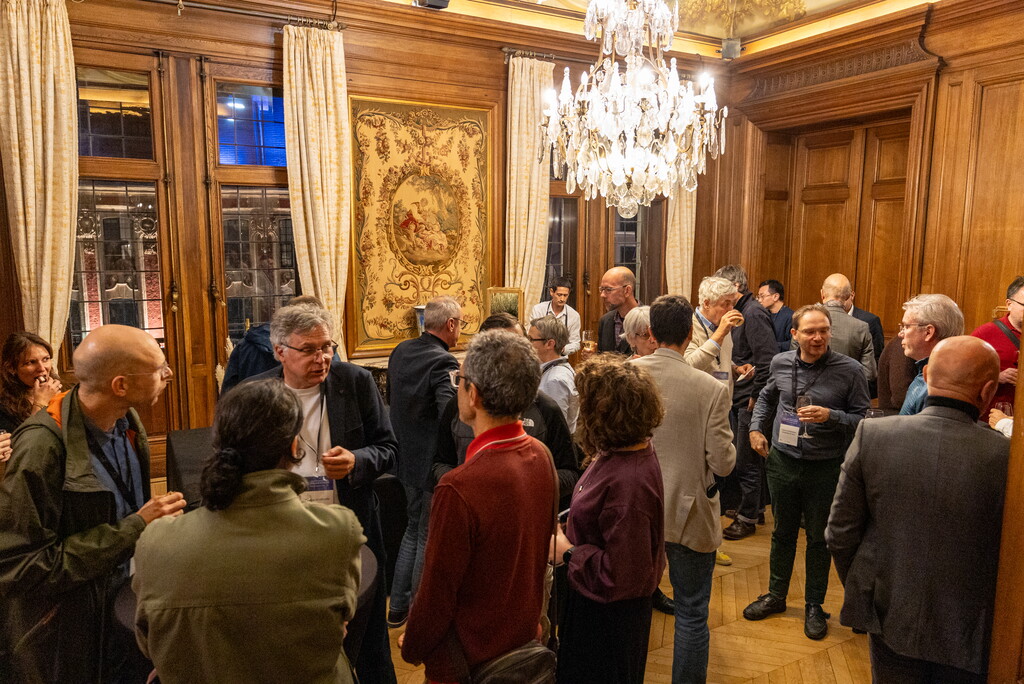
time for discussion and networking to conclude the session
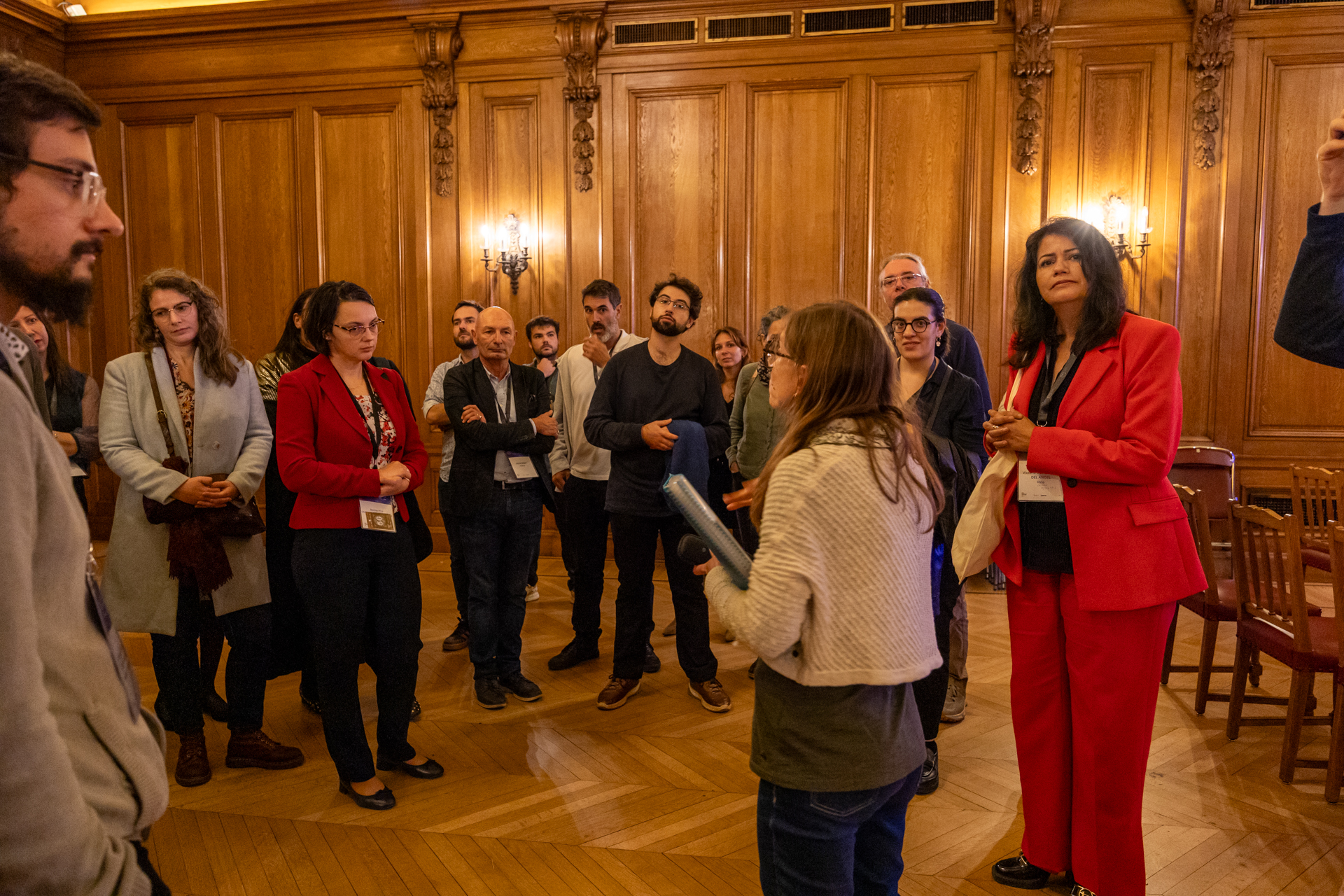
The session concluded with a guided tour of the Palais de la Bourse, followed by a networking dinner reception, providing participants and speakers with a conducive setting to continue discussions and strengthen connections between research, engineering, and digital health stakeholders.